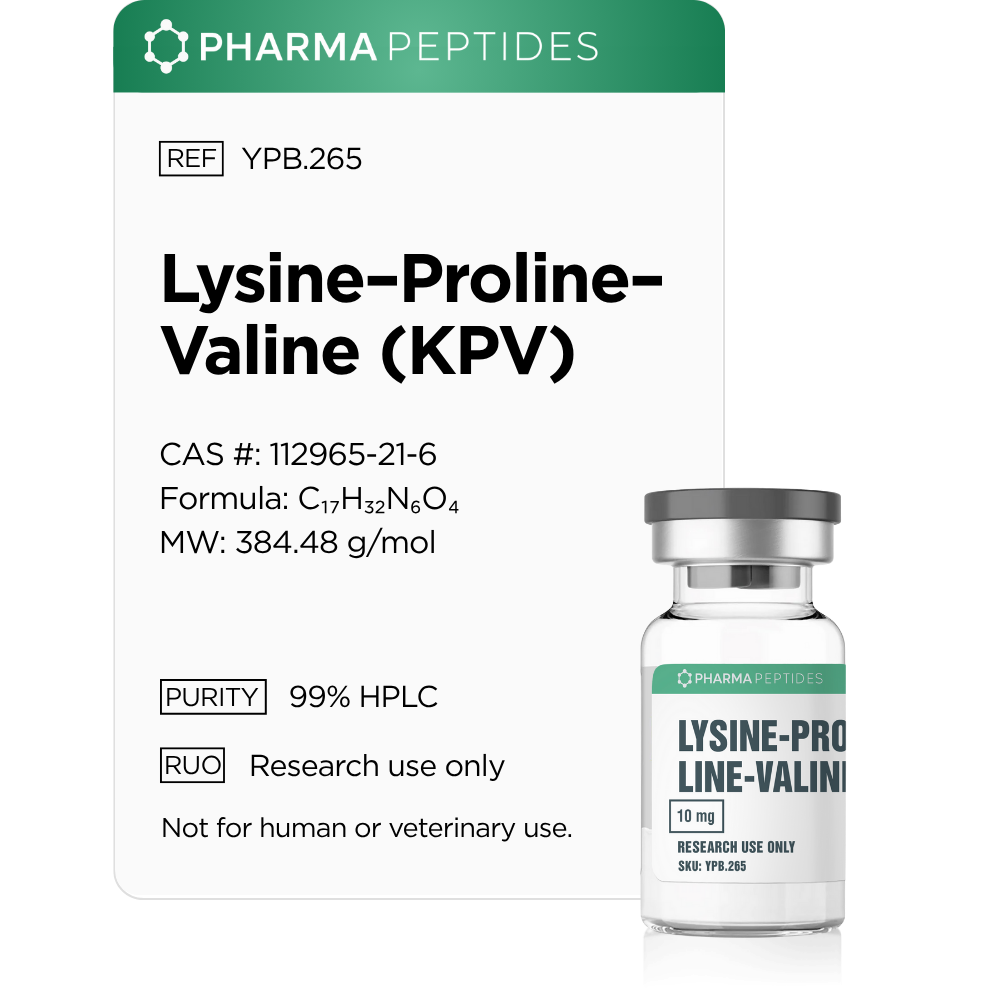
What is KPV studied for?
Inflammatory Signaling Research Investigated in preclinical models for its effects on NF-κB pathway activation and pro-inflammatory signaling cascades.
Mucosal & Intestinal Research Examined in animal models for observations related to intestinal epithelial inflammation and mucosal immune response.
Receptor & Transport Pharmacology Research Studied in laboratory research for interactions with melanocortin receptor binding and PepT1-mediated cellular uptake.
Cytokine & Immune Response Research Evaluated in preclinical tissue models for observations related to pro-inflammatory cytokine regulation and immune-cell activity.
How should KPV be stored?
All of our products are manufactured using the Lyophilization (Freeze Drying) process, which ensures that our products remain 100% stable for shipping for up to 3-4 months. Once the peptides are reconstituted (mixed with bacteriostatic water), they must be stored in the fridge to maintain stability. After reconstitution, the peptides will remain stable for up to 30 days.
Lyophilised (Unopened)
−20°C for up to 24 months
Reconstitution Solvent
Bacteriostatic water recommended
Reconstituted Solution
2–8°C for up to 28 days
Avoid
Repeated freeze-thaw cycles
Handling Notes
Reconstitute slowly by adding solvent to the side of the vial and allowing it to dissolve without agitation. Do not shake. Store away from direct light. All products are shipped with dry ice or cold packs to maintain cold-chain integrity.
Certificate of Analysis
All KPV batches are independently tested by a third-party laboratory for purity and identity verification via HPLC with UV detection coupled with Mass Spectrometry.
| Test |
Method |
Specification |
Result |
| Peptide Identity |
Mass Spectrometry |
Confirmed |
Identity Confirmed
|
| HPLC Purity |
Reverse-Phase HPLC |
≥99% |
99.2% — Pass
|
| Endotoxin (LAL) |
LAL Assay |
<1.0 EU/mg |
<0.8 EU/mg — Pass
|
| Heavy Metals |
ICP-MS |
Below USP limits |
All Below Threshold
|
| Appearance |
Visual |
White lyophilised powder |
Pass
|
Independent Lab Verified · Full PDF COA Available on Request