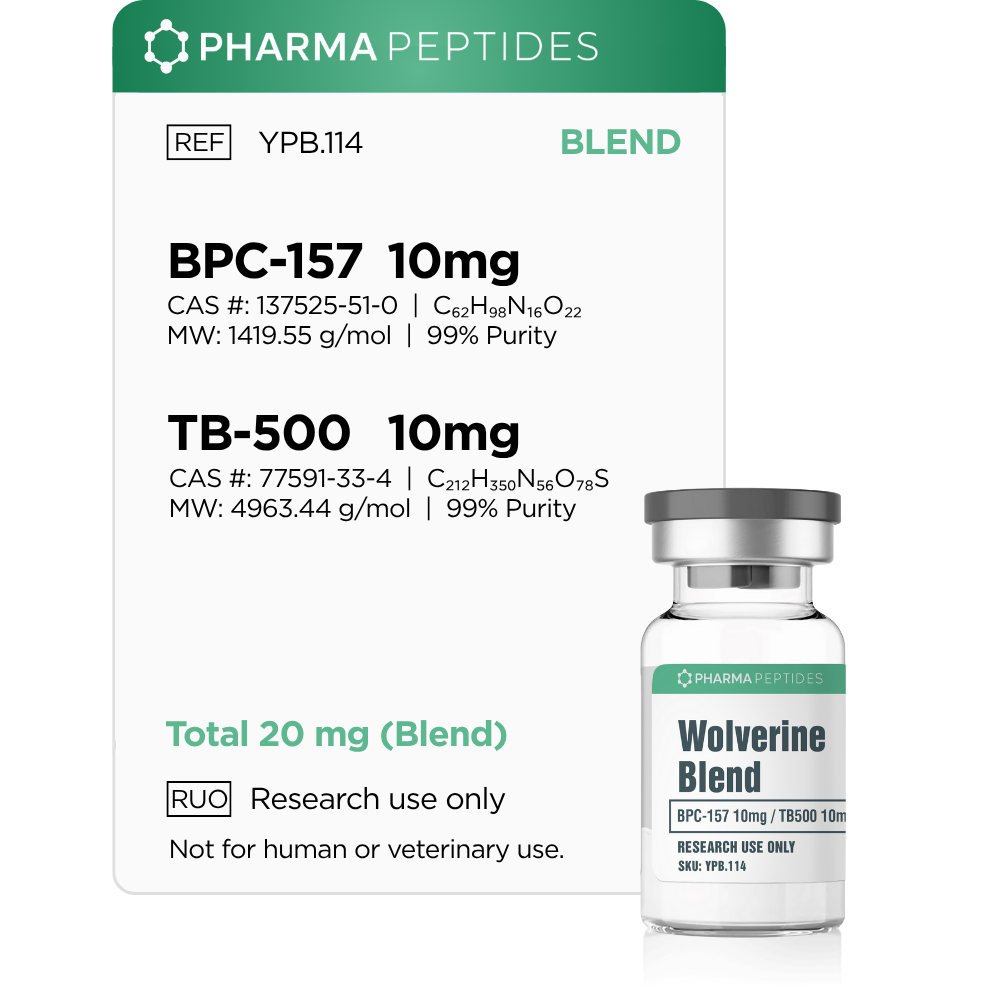
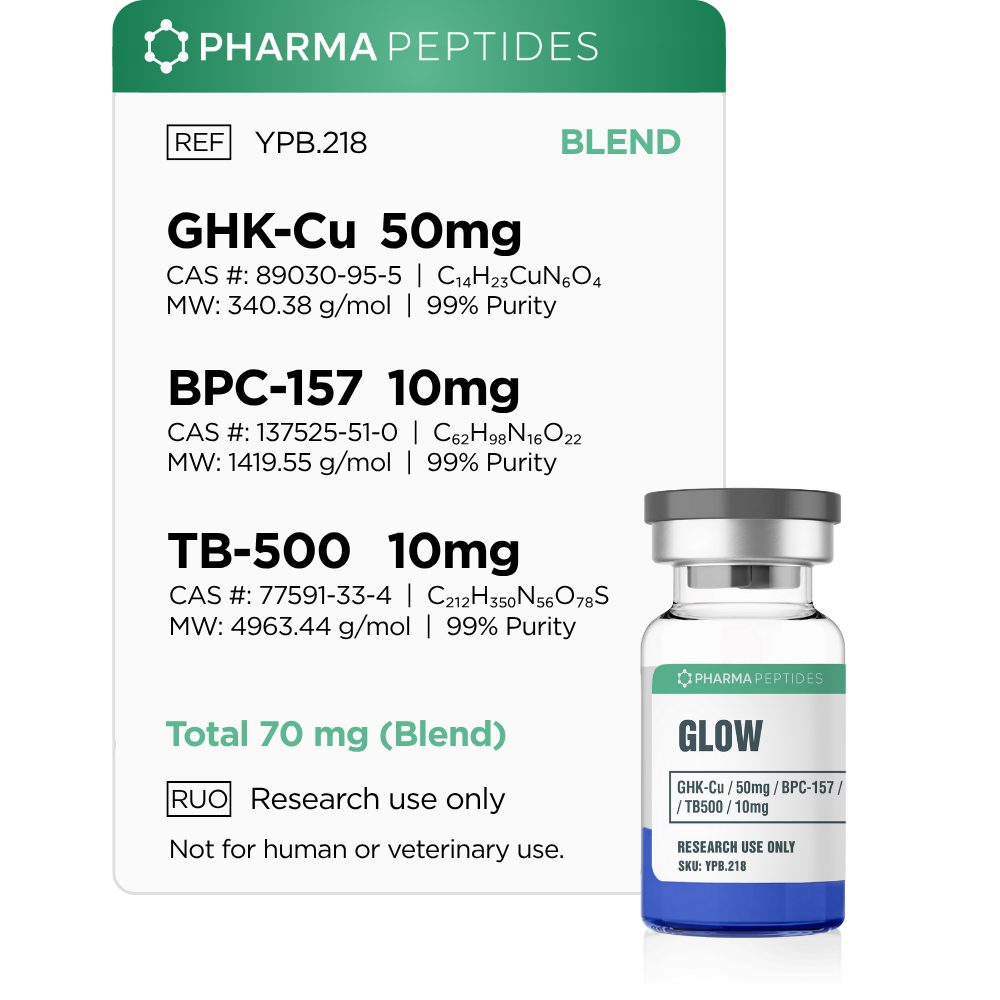
What is BPC-157/TB-500?
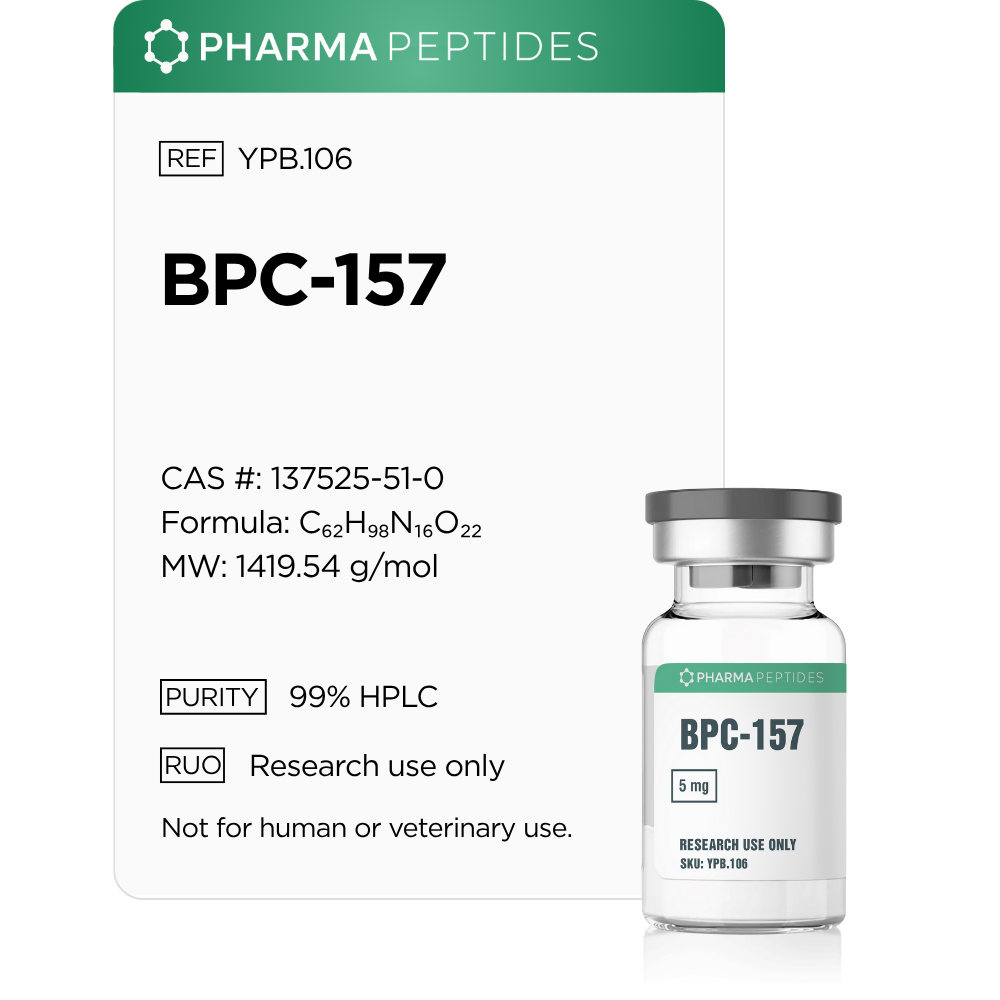
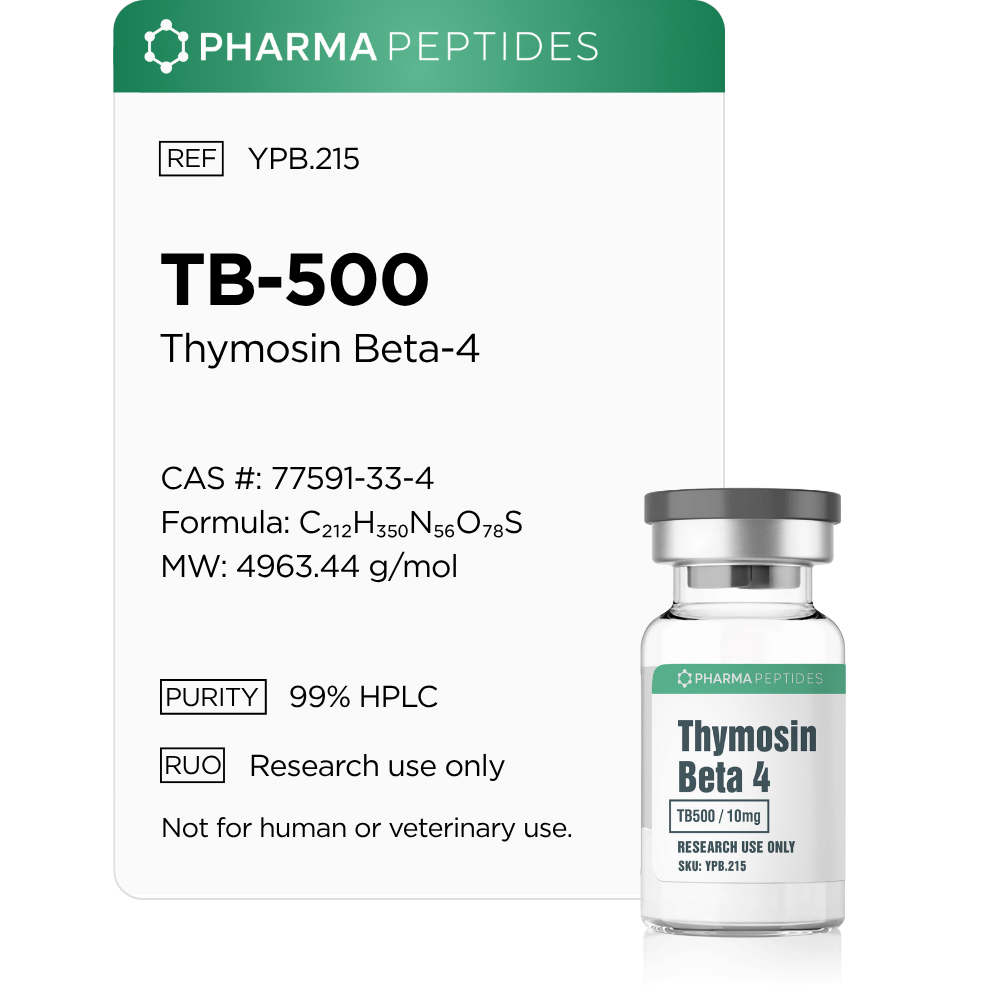
This blend combines two peptides that were discovered decades apart but ended up being natural partners in research. BPC-157 came from Croatian scientists in the early 1990s who were studying the protective properties of stomach fluid. TB-500, on the other hand, traces back to the 1960s when Dr. Allan Goldstein and his team at the National Institutes of Health were exploring the thymus gland and discovered a family of peptides called thymosins.
Researchers noticed that these two peptides seemed to tackle tissue repair from different angles. BPC-157 has been studied for its interactions with angiogenic signaling pathways in preclinical models. TB-500 has been researched for its role in actin regulation and cellular migration—mechanisms that are of interest in tissue repair research. Scientists started wondering: what if you used both at once?
Studies combining the two peptides have appeared in preclinical wound-model and musculoskeletal-model research. This product is intended for research use only.
What is BPC-157/TB-500 studied for?
“Wolverine” is a nickname for a research blend combining BPC-157 (a gastric peptide fragment) and TB-500 (a fragment of thymosin beta-4). Together, they are commonly studied for their potential roles in tissue repair and recovery processes.
In preclinical and experimental settings, this combination has been investigated for:
- Supporting soft tissue healing (muscle, tendon, ligament)
- Promoting angiogenesis (formation of new blood vessels)
- Enhancing cell migration and regeneration
- Modulating inflammatory responses
- Potential applications in gut integrity and recovery (primarily tied to BPC-157)
Because of these overlapping mechanisms, the blend is often associated with accelerated recovery pathways—hence the “Wolverine” nickname.
How should BPC-157/TB-500 be stored?
All of our products are manufactured using the Lyophilization (Freeze Drying) process, which ensures that our products remain 100% stable for shipping for up to 3-4 months. Once the peptides are reconstituted (mixed with bacteriostatic water), they must be stored in the fridge to maintain stability. After reconstitution, the peptides will remain stable for up to 30 days.
Lyophilised (Unopened)
−20°C for up to 24 months
Reconstitution Solvent
Bacteriostatic water recommended
Reconstituted Solution
2–8°C for up to 28 days
Avoid
Repeated freeze-thaw cycles
Handling Notes
Reconstitute slowly by adding solvent to the side of the vial and allowing it to dissolve without agitation. Do not shake. Store away from direct light. All products are shipped with dry ice or cold packs to maintain cold-chain integrity.
Certificate of Analysis
All BPC-157/TB-500 batches are independently tested by a third-party laboratory for purity and identity verification via HPLC with UV detection coupled with Mass Spectrometry.
| Test |
Method |
Specification |
Result |
| Peptide Identity |
Mass Spectrometry |
Confirmed |
Identity Confirmed
|
| HPLC Purity |
Reverse-Phase HPLC |
≥99% |
99.2% — Pass
|
| Endotoxin (LAL) |
LAL Assay |
<1.0 EU/mg |
<0.8 EU/mg — Pass
|
| Heavy Metals |
ICP-MS |
Below USP limits |
All Below Threshold
|
| Appearance |
Visual |
White lyophilised powder |
Pass
|
Independent Lab Verified · Full PDF COA Available on Request