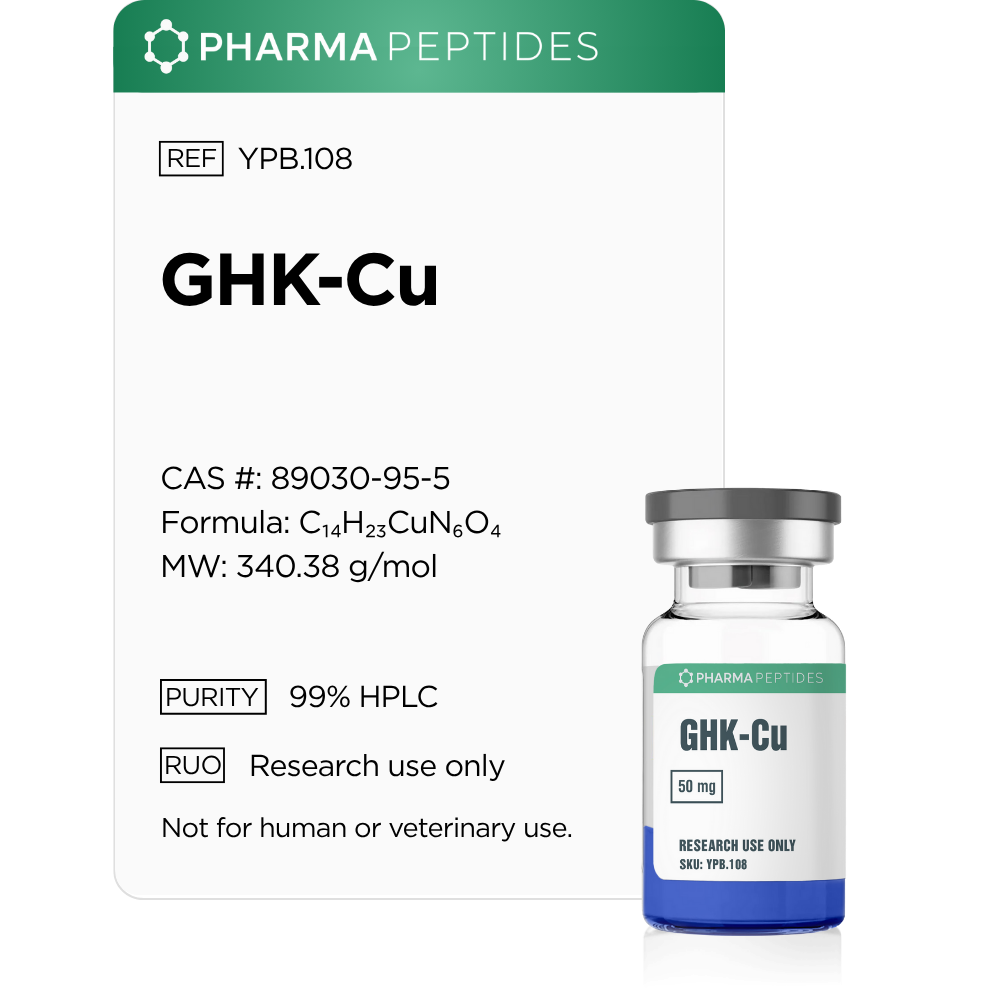
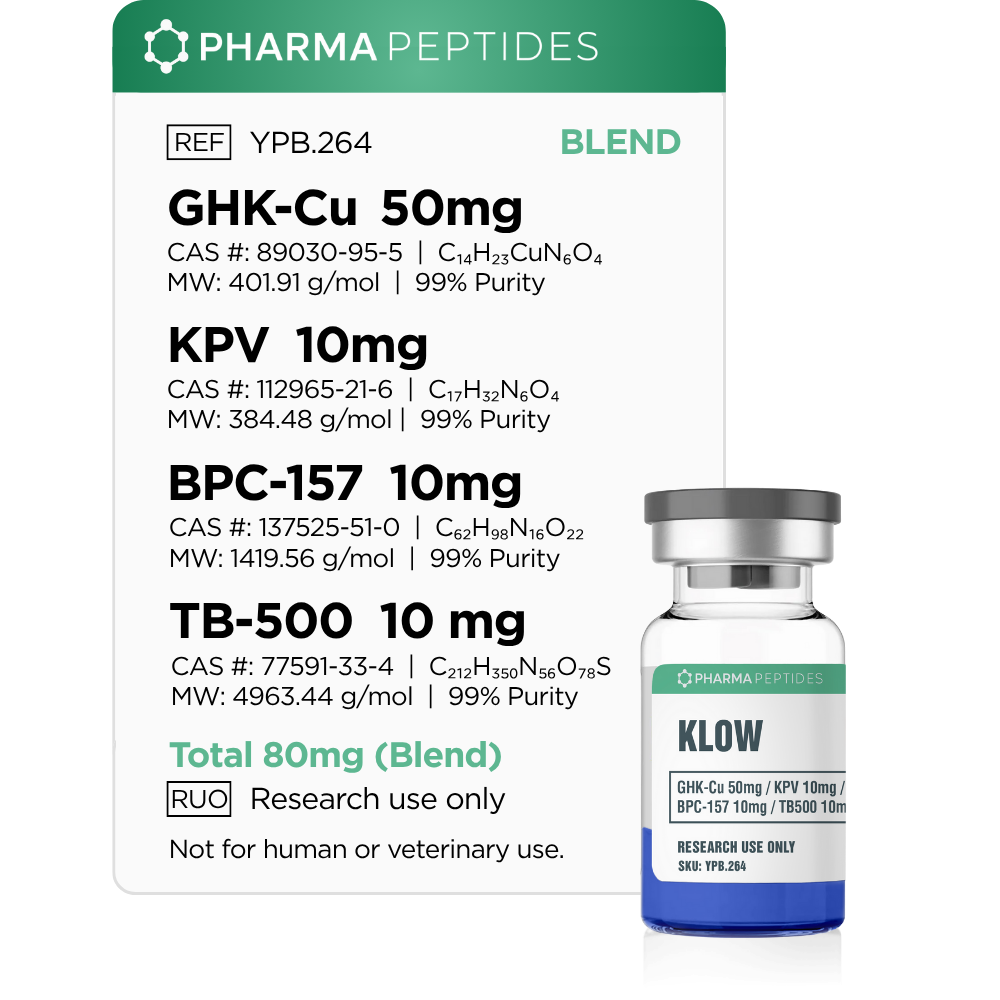
What is GHK-CU?
GHK-Cu was first characterized by Dr. Loren Pickart in 1973 while he was studying human blood plasma at the University of Washington. His laboratory work compared biochemical activity between plasma samples from different age cohorts and isolated a small copper-binding peptide that appeared to account for differences observed in the assays.
The peptide was three amino acids long—glycine, histidine, and lysine—bound to a copper ion. Dr. Pickart designated it GHK-Cu. Subsequent observational research reported that plasma GHK concentrations varied across age groups, which prompted further laboratory investigation of the molecule.
Over the following decades, published research on GHK-Cu expanded across fibroblast biology, copper-enzyme biochemistry, and gene-expression profiling, with genomic analyses reporting modulation of several thousand genes in cultured cells. GHK-Cu has appeared in peer-reviewed preclinical publications since the 1970s. This product is intended for research use only.
What is GHK-CU studied for?
Collagen Synthesis Research
Investigated in preclinical models for its effects on fibroblast activity and collagen production pathways.
Wound Healing Research
Examined in animal wound models for observations related to tissue closure and dermal repair mechanisms.
Extracellular Matrix Research
Studied in laboratory research for interactions with matrix remodeling pathways, including glycosaminoglycan and proteoglycan synthesis.
Copper Transport Research
Evaluated in preclinical models for observations related to copper(II) binding and metal-dependent cellular signaling.
For research use only. Not for human or veterinary use.
How should GHK-CU be stored?
All of our products are manufactured using the Lyophilization (Freeze Drying) process, which ensures that our products remain 100% stable for shipping for up to 3-4 months. Once the peptides are reconstituted (mixed with bacteriostatic water), they must be stored in the fridge to maintain stability. After reconstitution, the peptides will remain stable for up to 30 days.
Lyophilised (Unopened)
−20°C for up to 24 months
Reconstitution Solvent
Bacteriostatic water recommended
Reconstituted Solution
2–8°C for up to 28 days
Avoid
Repeated freeze-thaw cycles
Handling Notes
Reconstitute slowly by adding solvent to the side of the vial and allowing it to dissolve without agitation. Do not shake. Store away from direct light. All products are shipped with dry ice or cold packs to maintain cold-chain integrity.
Certificate of Analysis
All GHK-CU batches are independently tested by a third-party laboratory for purity and identity verification via HPLC with UV detection coupled with Mass Spectrometry.
| Test |
Method |
Specification |
Result |
| Peptide Identity |
Mass Spectrometry |
Confirmed |
Identity Confirmed
|
| HPLC Purity |
Reverse-Phase HPLC |
≥99% |
99.2% — Pass
|
| Endotoxin (LAL) |
LAL Assay |
<1.0 EU/mg |
<0.8 EU/mg — Pass
|
| Heavy Metals |
ICP-MS |
Below USP limits |
All Below Threshold
|
| Appearance |
Visual |
White lyophilised powder |
Pass
|
Independent Lab Verified · Full PDF COA Available on Request